
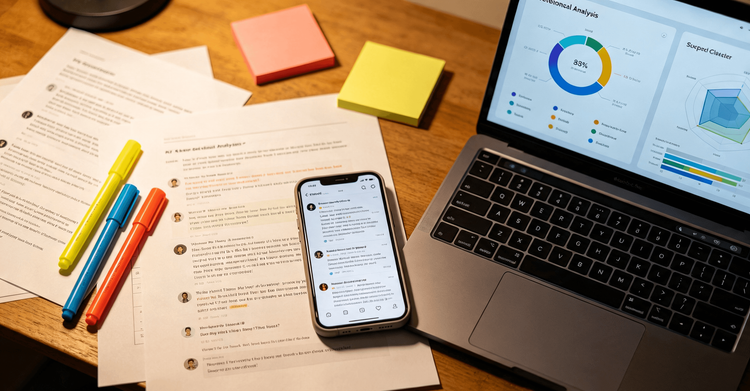
App review analytics tools fill a huge gap in modern tech workflows. They target real pain points for developers, product managers, and support teams. These tools take unstructured user feedback and turn it into clear, actionable product and marketing decisions. Regular LLMs only summarize or rewrite text. Review-focused AI does far more. It sorts user sentiment, clusters feedback themes, tracks update-related trends, and benchmarks competitor performance. This article breaks down its practical functions, core advantages, common flaws, and simple habits to get reliable results.
How App Review AI Differs From Standard Generative AI
Basic chat AI follows a simple input-output pattern. You paste text. You get a polished response. Review analytics AI uses three custom machine learning layers trained specifically on app store data. These layers do not exist in generic AI tools.
1. Sentiment Classification Model
This is the core foundation of every review analytics platform. The system scans every public review and tags it positive, neutral, or negative. It also detects subtle user emotions like frustration and confusion. Generic AI lacks mobile industry training. It frequently misinterprets app-specific language such as “crash on startup” or “paywall locked core features.” Purpose-built review models avoid these basic mistakes and deliver consistent labeling.
2. Thematic Keyword Clustering Engine
Users never write reviews with consistent wording. Dozens of unique comments can describe the exact same loading error or usability issue. This AI clusters scattered entries into defined categories: performance bugs, pricing friction, feature requests, and accessibility issues. It counts total feedback volume for each theme. Teams see exact problem frequencies instead of random, unorganized comments.
3. Trend and Competitor Tracking Layer
This feature separates review analytics AI from basic text summarizers. The tool pulls fresh iOS and Android reviews around the clock. It spots sudden rating drops and negative feedback spikes right after you release an update. It also monitors competitor review sections in real time. You identify exact user pain points rival products fail to fix. You use those gaps to guide your own feature updates and marketing angles.
These tools support teams, they do not replace them. AI surfaces hidden data patterns. Human teams keep full control over final product decisions.
Practical Use Cases for Review Analytics AI
This tool solves real operational problems for both small indie teams and large enterprise studios.
1. Catch Critical Bugs Right After Launch
Traditional workflows force developers to manually scan reviews for days post-update. Severe bugs often stay hidden inside low-star comment sections. Review AI triggers instant alerts when negative feedback surges. It isolates specific issues like camera crashes, payment failures, and sync errors. It groups matching user quotes so engineers diagnose problems faster. Small teams cut manual review work by over 80 percent with this feature.
2. Build Roadmaps Based on Real User Demand
Many teams prioritize features based on internal opinions, not user data. This wastes development resources. Review AI quantifies actual user demand. It ranks feature requests based on mention frequency, sentiment intensity, and user retention impact.
For example, fitness app analytics show users who request workout calendar features tend to stay active longer. In contrast, users frustrated by missing calorie-tracking functions churn at a much higher rate. Teams use this tangible data to prioritize high-value updates instead of subjective internal preferences.
3. Uncover Competitor Weaknesses for Growth
Regular market research often includes biased blog content, sponsored articles, and paid reviews. Review analytics AI only analyzes genuine user feedback from competing apps. It reliably surfaces recurring pain points competitors fail to resolve.
Many popular productivity apps constantly receive complaints about unstable cross-device syncing. Product teams can turn this common user frustration into a core selling point, guiding both feature development and social media marketing strategies.
4. Streamline Support and Protect App Reputation
Support teams repeatedly answer identical user questions regarding subscriptions, in-app purchases, and basic usability confusion. This AI automatically compiles real-time FAQs from public reviews. It generates clean, consistent reply templates for store responses and community management.
It also flags rapidly spreading negative review threads early. Teams resolve public complaints before low-star ratings damage overall app store reputation.
Two Main Tiers of Review Analytics AI Tools (2026)
Current review analytics platforms fall into two clear categories, each built for different team scales.
Enterprise All-in-One Platforms (AppFollow, Appfigures AI)
These tools support bulk cross-store review scraping, custom sentiment model tuning, and team workflow integrations. They generate polished monthly insight reports for stakeholders.
They work best for large game studios and mobile SaaS products with massive active user bases. The main downside is expensive subscriptions and overloaded dashboards that small teams do not need.
Lightweight Low-Cost & Open-Source Tools
These lightweight tools feature fast setup, simplified theme clustering, and weekly plain-text digest updates. Interfaces stay minimal and easy to navigate. Free tiers work perfectly for indie developers, student teams, and small app projects.
Independent testing proves lightweight models achieve 91% to 93% sentiment accuracy. The small accuracy gap with enterprise tools does not affect daily decision-making for most mobile teams.
Key Limitations to Keep in Mind
No AI tool delivers flawless results every time. Three consistent weaknesses appear across all review analytics systems.
First, AI struggles with sarcasm and contextual irony. Ironic negative feedback often gets mislabeled as neutral or positive. Always spot-check random review samples before adjusting product plans.
Second, public reviews carry natural negative bias. Users leave feedback mostly when they experience problems. AI outputs overrepresent complaints and underrepresent satisfied users. Avoid over-tweaking minor issues while ignoring popular core functions.
Third, basic models struggle with regional slang and non-English feedback. Global app teams need upgraded multilingual models for accurate international analysis.
Best Practices to Maximize Tool Accuracy
Follow these simple routines to get clean, reliable data.
- Enable weekly automated digests and disable redundant daily alerts. Keep instant notifications only for drastic negative sentiment spikes.
- Separate bug reports and feature requests inside your tool filters. Send technical issues to engineering teams and forward feature demand data to product teams.
- Perform quarterly manual spot-checks. Compare human judgment against AI tagging to calibrate data reliability.
- Pair sentiment results with download and retention metrics. Always cross-reference user feedback with real behavioral data before making updates.
Future Trends for Review Analytics AI (2026–2027)
Upcoming model upgrades will add powerful new capabilities. Predictive simulation will forecast rating changes and retention shifts before teams ship new features. Multimodal analysis will process user screenshots and visual bugs alongside written reviews.
Open-source tools will continue lowering barriers for individual developers. Local desktop models will offer full sentiment analysis without recurring subscription fees.
Generic generative AI tools dominate online discussions, but review analytics AI creates tangible, measurable value for mobile creators. It turns chaotic user feedback into structured product strategy.
Always validate AI outputs manually. Tools accelerate pattern detection, but human judgment finalizes every important product decision.
Start using a lightweight review analytics tool today to audit your app feedback and refine your product roadmap with real user data.